Neem Bagh
Prelude, our entrance walkway, is lined with Rain trees, Saptaparnis, Cordias and the mighty Siris. Every monsoon, they all grow larger, more voluminous, covering the sky above the school even more. Every courtyard is a small garden. I have lost count of how many courtyards there are. Northstar has always been a garden. What else could it have been, if not a garden? The constant flux that we all find ourselves in at the school, the vexations, the vicissitudes, the rhythm, the seasons, the toil, the harvest and the beauty of it all, is but a garden.
This year, we are starting an all-season learning garden - Neem Bagh. In 2018, we started our Horticulture program. Over the years, it morphed in to a winter elective course. Every winter, kids plant and harvest short cycle crops suitable for the season. Tending to a vegetable garden is not an easy task. It requires full time care takers and agri-planning.
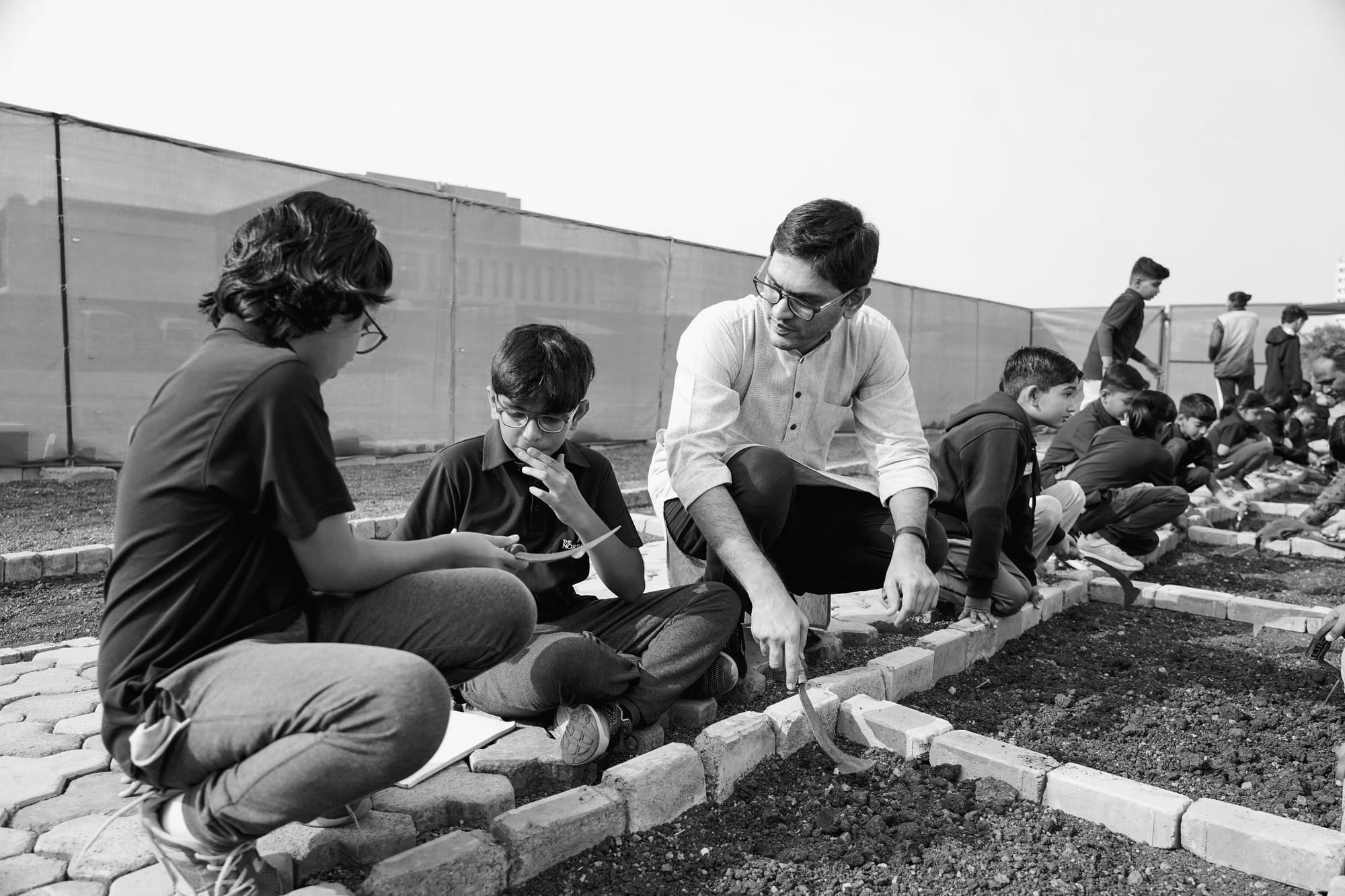
Our curriculum is broad and deep. Every curriculum is an act of choice, and selection. The world, and all that it contains, is simply too vast to fit in to a curriculum. So we make choices. And I choose for kids to be in a garden, which they have helped in sustaining. Seeding, weeding, watering, harvesting.
Being in a garden that one has tended is in itself a rewarding experience. I do not find the need to establish causal links to learning. Why must one do that always? But let me try to do that in way that may illuminate, however dimly, some dark corners of curriculum design.
The learning journey at Northstar, guided primarily by our curriculum maps, is tight and lose at the same time. It allows for different approaches to teaching concepts. To get the obvious ones out of the way, let me mention that gardens are a great site to learn science and also a bit of mathematics, across many grade levels. Even in isolation, these are good goals to pursue.
Gardens are fundamentally an ecological sites of education. How can one take action to save a forest, if one has not heard the silence of the forest, the song of the cuckoo, the call of the langoor and the roar of the tiger? By that same account, how can one understand the seasons, the rhythm of the earth, the toil of the farmer, and the joy of food if one has not tended to a garden. Garden and its tending, are tactile, corporeal and of the body. Herbert Read said we have become too cerebral. In garden, one enters the body again. The body feels heat, it perspires, it has to lift things, movement and effort has purpose and meaning. While nutrition and healthy eating are beginning to make inroads in to main stream curriculum, it is easy to forget that it is still an adult's agenda.
I want to make space for the phenomenological experience of the act itself. The tactile, felt experience, what we might call body pedagogics. I have been feeling and writing about nature deficit in the modern world and most acutely in the modern school. Gardens allow for this body pedagogics to unfold.
In the techno-hegemonic state of docile consumption and hollow spectacle, gardens are a fount of the alternative - economic, political and social. Sanitised retail and marketing create a total disconnect of production with consumption. That bridge can be built through sensory engagement and materiality of the soil and plants.
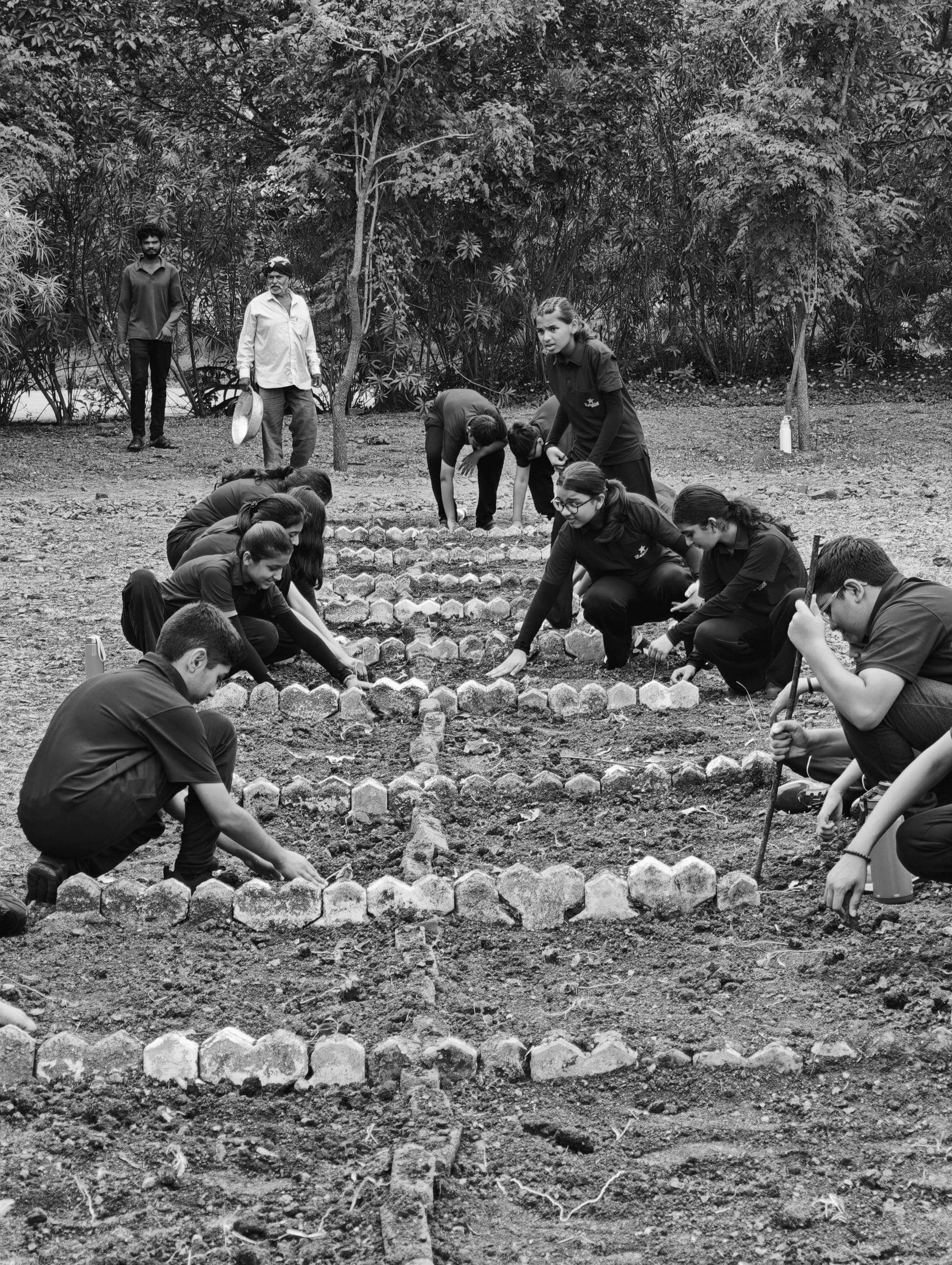
Neem Bagh at Northstar is all of the above and nothing really much at the same time. It is simply a piece of school land that has plants on it and at the same it is a place of discovery and learning together.